
2025 looks set to be a decisive year for companies that want to stay competitive. Innovation is accelerating and challenges in the digital world are becoming increasingly complex.
Today, generating new contacts is not enough. You need to know where leads come from, how much value they generate, and whether they will remain customers in the future. That’s why business lead generation has become an indispensable lever for growth and business sustainability.
This article explores five concrete and cutting-edge business lead generation strategies that every company should test in the coming year. From the power of automation to multichannel approaches, from personalization to data analytics and artificial intelligence, you will discover the key trends that are transforming the industry.
Do you want to discover how these strategies can turn lead collection into measurable and lasting results? Keep reading and get ready to revolutionize your approach to lead generation.
Why Business Lead Generation Is Changing in 2025
The business lead generation landscape is undergoing a profound transformation in 2025. This change is driven by new technologies, evolving customer behaviors, and a growing need to accurately track the value generated by each channel. Companies must rethink their approach to stay competitive, focusing on innovative strategies and increasingly precise data analysis.
Evolution of Acquisition Strategies
Both B2B and B2C customer purchasing habits are changing rapidly. Today, business lead generation must adapt to an ever more omnichannel customer journey, where digitization and interaction across multiple touchpoints are the norm. Standing out in a saturated market requires more sophisticated acquisition strategies capable of integrating behavioral data and personalization.
Many companies are revolutionizing their processes by adopting AI, automation, and big data. According to the latest statistics, those who implement advanced business lead generation strategies can achieve up to 35% more conversions. However, to get concrete results, it’s essential to track which channel each lead comes from and measure the generated revenue, as detailed on the Revenue by Acquisition Channel page.
Main Challenges for Companies
Despite the opportunities, business lead generation faces numerous challenges. The main difficulty is generating truly qualified leads, not just high volumes. It is often complex to accurately attribute the lead’s origin and assess its real economic value.
Another obstacle is data management, which is often fragmented across different departments and tools. Without proper integration between marketing and sales, budgets can be wasted on ineffective campaigns. Companies that invest without careful monitoring risk not understanding which channels bring real value and which only generate volume.
- Unclear channel attribution
- Data scattered across multiple platforms
- Difficulty linking leads to revenue and lifetime value
The Importance of Data Analysis in the Lead Lifecycle
Today, business lead generation cannot be limited to simply acquiring contacts. You need to monitor every stage of the lead’s journey, from the first touchpoint to the sale and repurchase. Using integrated platforms to analyze sales, traffic, and performance allows you to determine each lead’s lifetime value and optimize remarketing and upselling strategies.
Companies that adopt monitoring dashboards increase retention and customer quality. Integration between CRM and analytics tools becomes a key factor for making rapid, informed decisions. Only then can you understand which leads have the potential to generate value over time.
Emerging Trends for 2025
In 2025, business lead generation will be increasingly influenced by automation and artificial intelligence. These tools enable dynamic lead qualification by leveraging behavioral data to personalize experiences. Adoption of new digital channels like WhatsApp Business and LinkedIn Ads is also growing, offering advanced targeting opportunities.
Additionally, predictive models help anticipate prospect needs and optimize investments. 70% of companies plan to increase their budget on lead generation tools and data analytics, indicating a more data-driven and personalized direction.
5 Business Lead Generation Strategies to Try in 2025
In 2025, business lead generation requires an increasingly structured, data-driven, and personalized approach. Generating quality leads is not enough: you must track every data point, know which channel each contact comes from, calculate the generated revenue and lifetime value, and monitor if the lead makes repeat purchases over time.
In this section, we analyze five innovative and concrete business lead generation strategies, with practical examples, advantages, disadvantages, and tools to implement them successfully.
1. Personalized and Programmatic Landing Pages
Programmatic landing pages are one of the most effective solutions for business lead generation in 2025. By using behavioral data and advanced segmentation, you can create dynamic pages that adapt to the needs of each audience segment.
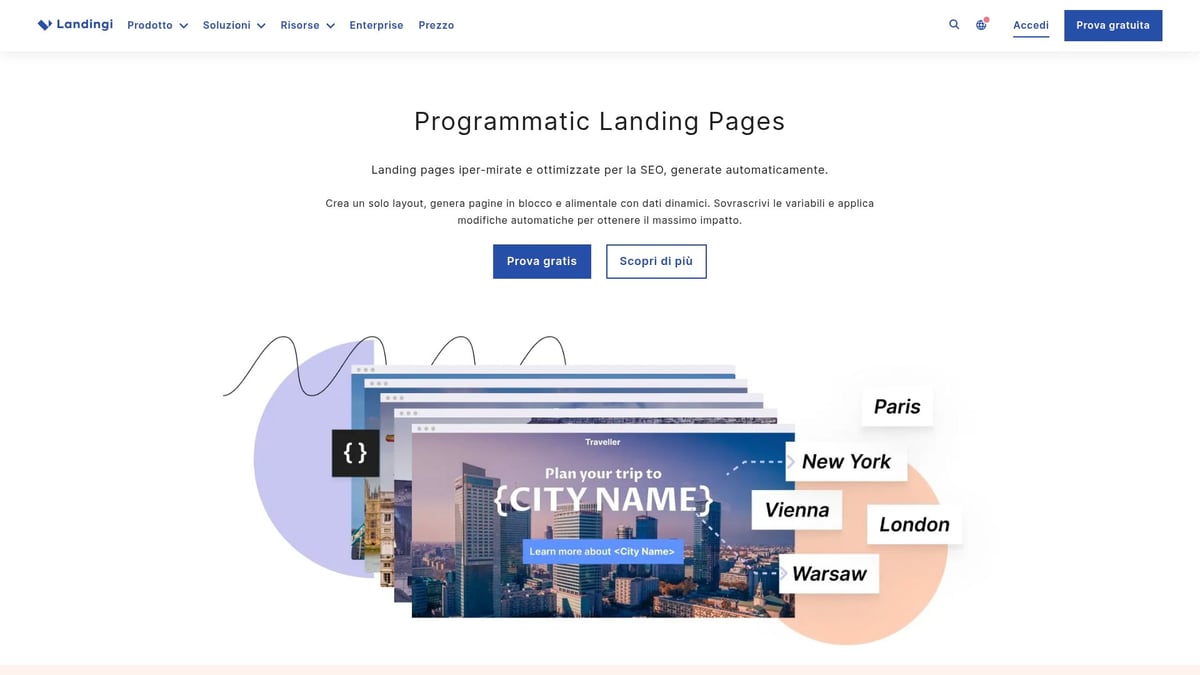
Advanced personalization can increase the conversion rate by up to 35%. By using modular templates, A/B testing, and CRM integration, companies can monitor in real time which channel the lead is coming from, the value generated, and the propensity to repurchase.
Main Advantages:
- Implementation speed and the ability to rapidly scale business lead generation.
- Personalization of messages and collection of detailed data.
- Seamless integration with automation tools and CRM to track the lead lifecycle.
Disadvantages:
- Requires a solid segmentation strategy.
- Requires quality, up-to-date content.
Practical Example: Landingi offers programmatic landing page and AI solutions, ideal for those who want to optimize business lead generation without sacrificing quality.
Advantages/Disadvantages Table
| Pros | Cons |
|---|---|
| Implementation speed | Requires segmentation strategy |
| Advanced personalization | Requires quality content |
| Data integration and complete tracking |
Using dynamic landing pages ensures you don’t lose valuable data. You can know exactly where the lead comes from, calculate the revenue generated, and set up remarketing actions based on lifetime value.
2. Multichannel Automation and Lead Nurturing
Workflow automation has become a pillar of business lead generation. In 2025, orchestrating campaigns across email, SMS, chatbots, and social media allows you to follow the prospect through every stage of the customer journey.

By segmenting leads based on behavior and lead scoring, you achieve personalized and consistent communication, boosting conversions and lifetime value. Companies that adopt multichannel nurturing strategies see improvements in lead quality and retention.
Advantages:
- Time savings and reduction of manual errors.
- Consistent communication across all channels.
- Traceability of interactions and touchpoints in business lead generation.
Disadvantages:
- Requires a solid and up-to-date database.
- Requires a coherent and planned content strategy.
Practical Example: Mailchimp offers accessible automation tools for both startups and established companies, with customizable workflows and real-time analytics.
Key Activities:
- Creation of automated workflows for each lead segment.
- Analysis of campaign performance on each channel.
- Monitoring of generated value and repurchase rate.
This strategy allows you to collect comprehensive data throughout the lead lifecycle, know where each lead comes from, and whether they make repeat purchases, optimizing business lead generation.
3. CRM and Advanced Lead Data Analysis
Adopting integrated platforms that collect and analyze data from CRM, marketing, and sales is essential for business lead generation. An advanced system allows you to track every acquisition source, the generated revenue, lifetime value, and propensity to repurchase.
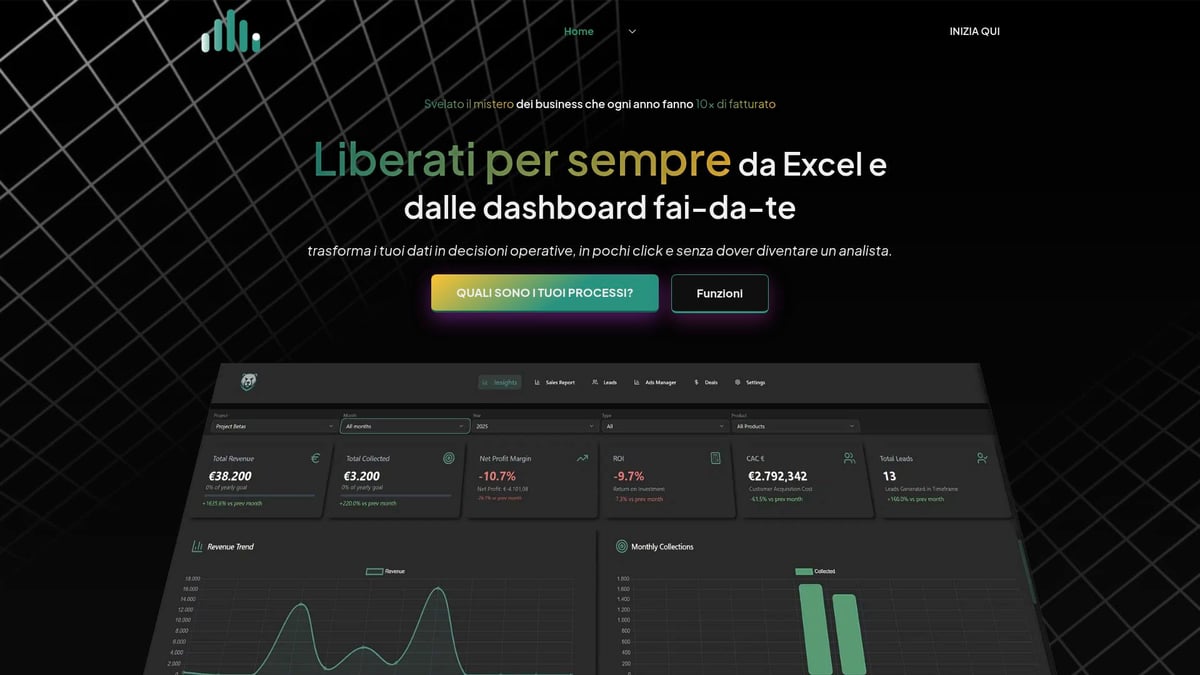
Companies can automate reports, monitor teams and individual sales reps, eliminating Excel sheets and manual dashboards. Alignment between marketing and sales thus becomes concrete and measurable.
Advantages:
- Fast, data-driven decisions.
- Integration with any CRM and commission automation.
- AI analysis of sales calls and performance.
Disadvantages:
- Requires an initial setup and training phase.
- May require adaptation of internal processes.
Practical Example: Getinsights offers tools for business lead generation ranging from a free basic plan to advanced AI solutions, ideal for SMEs and growing companies.
Optimal Usage Plan:
- Connect CRM, marketing platforms, and analytics tools.
- Track each lead from acquisition source to realized revenue.
- Monitor lifetime value for each customer segment.
With these tools, you can know in real time how much value each channel generates, optimizing business lead generation and remarketing strategies.
4. LinkedIn Lead Generation and Social Selling
LinkedIn remains the go-to channel for B2B business lead generation. With LinkedIn Ads, InMail, and integrated lead gen forms, you can reach decision-makers and qualified prospects directly.
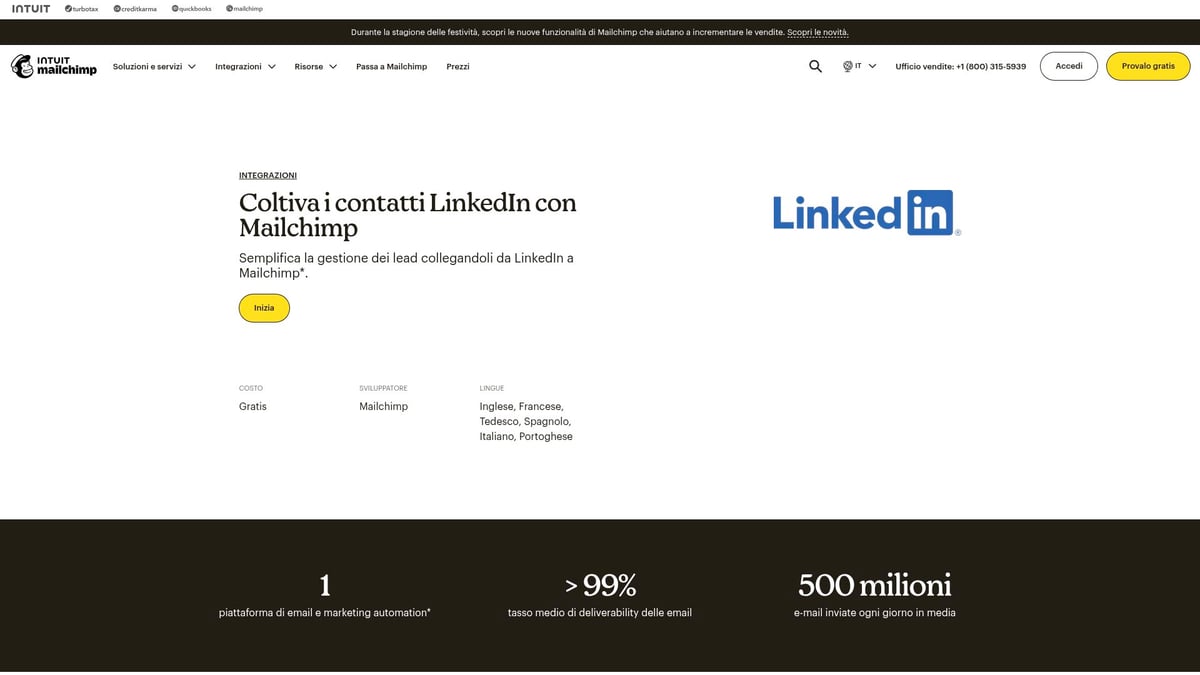
Social selling strategies, based on relationship building and authority, help increase trust and the quality of leads collected. Advanced targeting allows you to segment the audience and monitor each lead’s journey.
Advantages:
- Direct access to high-quality leads.
- Ability to integrate data with CRM and automation tools.
- Detailed tracking of interactions and value generated in business lead generation.
Disadvantages:
- High advertising costs.
- Requires an active presence and valuable content.
Practical Example: Mailchimp and LinkedIn offer integrations that automate lead collection and management, making the process more efficient and measurable.
Summary Table:
| Pros | Cons |
|---|---|
| High-quality B2B leads | High advertising costs |
| Data integration and automation | Requires strategic presence |
| Tracking of lead journey and value |
Using LinkedIn in business lead generation also means you can analyze prospects’ lifetime value, assess the most profitable channels, and optimize your budget.
5. Interactive Content Marketing and Advanced Lead Magnets
Interactive content marketing is one of the most effective trends for business lead generation. Quizzes, calculators, personalized ebooks, and webinars attract qualified leads and allow you to collect valuable data for segmentation.

Advanced lead magnets that solve specific problems improve SEO positioning and increase engagement. Companies can then monitor which channel the lead comes from, the value generated, and set up targeted remarketing activities based on lifetime value.
Advantages:
- Collection of detailed data for each lead.
- Improvement of brand authority and loyalty.
- Possibility of targeted and personalized remarketing.
Disadvantages:
- Requires resources for content production.
- Requires a solid and consistent editorial strategy.
Practical Example: Mailchimp offers tools to create interactive content and automate business lead generation, making it easier to measure results.
List of Effective Lead Magnets:
- Interactive quizzes for lead qualification.
- Personalized calculators for value and ROI.
- Webinars with data collection and automatic follow-up.
This strategy lets you track every data point, know where each lead comes from, and measure lifetime value, optimizing the entire business lead generation funnel.
How to Measure the Effectiveness of Your Lead Generation Strategies
Measuring the effectiveness of business lead generation is essential to ensure concrete and sustainable results. Generating leads is important, but only by monitoring precise data and each contact’s journey can you understand which strategies bring real value. It’s crucial to know which acquisition channel each lead comes from, how much revenue it produces, and whether its lifecycle leads to repeat purchases over time.
Key Metrics to Monitor
To evaluate business lead generation, focus on these fundamental metrics:
- Conversion rate of landing pages and forms.
- Cost per lead (CPL) and return on investment (ROI).
- Lifetime value of leads and repurchase rate over time.
- Percentage of qualified leads (MQL/SQL) relative to the total.
Monitoring these metrics allows you to optimize budget and improve performance. By using qualified lead analysis tools, companies can identify the most profitable contacts and focus efforts on those with the highest potential.
The Importance of Channel Attribution
Knowing exactly which channel each lead comes from is crucial for business lead generation. Channel attribution enables you to measure generated revenue and allocate advertising resources more effectively.
Through advanced tracking systems and UTM parameters, you can trace the prospect’s path and understand which initiatives deliver the best leads. According to the 2025 Full Guide to Acquisition Channels, companies that adopt a clear attribution model gain valuable insights for planning data-driven strategies and increasing returns.
Data Analysis and Automated Reporting
Data analysis in business lead generation goes beyond collection; it requires integrated dashboards to visualize performance in real time. Automated reports reduce human errors and speed up decision-making.
Advanced platforms allow you to monitor sales, traffic, and conversions in a single panel. This approach ensures transparency, fosters cross-department collaboration, and enables rapid testing of new strategies. Effective reporting is the foundation for continuously improving the collection of quality leads.
Continuous Optimization and A/B Testing
Business lead generation demands a process of constant optimization. Testing new strategies, landing pages, and messages through A/B testing helps identify what works best for your target.
Companies that adopt a data-driven mindset and train their teams on analytical tools succeed in improving lead quality and ROI over time. Implementing iterative improvements turns lead generation into a durable and measurable growth lever.
Common Mistakes and Best Practices in Business Lead Generation
Business lead generation is a complex process, often undermined by widespread mistakes that can compromise results. To obtain truly useful leads, it’s essential not only to generate contacts but also to monitor every stage of the lifecycle, from acquisition channel to economic value produced. Let’s analyze the main mistakes to avoid and the best practices for 2025, with concrete examples and strategies to prepare for new challenges.
Mistakes to Avoid
One of the most common mistakes in business lead generation is focusing only on lead quantity, neglecting quality. Many companies fail to correctly track lead origins, losing valuable information about acquisition channels and generated revenue. Another frequent error is ignoring lifetime value—the value a lead can bring over time, including repeat purchases. Furthermore, fragmented data management across departments and tools often leads to an incomplete view and ineffective decisions.
- Focusing only on numbers, not quality
- Not attributing leads to the correct channel
- Neglecting the nurturing phase and the customer’s future value
According to Recent Lead Generation Statistics and Trends, 60% of companies do not know where their best leads come from, increasing the risk of wasting budget and opportunities.
Best Practices for 2025
To maximize business lead generation results, it’s essential to integrate all data into a single platform, providing a complete view of lead journeys and value. Aligning sales and marketing on shared metrics is crucial to avoid waste and improve collaboration. Personalizing communications, leveraging automation and advanced segmentation, and continuously monitoring lifetime value are winning practices.
- Data integration between CRM and analytics tools
- Automation of lead nurturing and qualification
- Personalization of campaigns based on behavior
A detailed guide on implementing these strategies can be found in the lead acquisition strategies resource, useful for those looking to optimize processes and results.
Success Stories and Case Studies
Numerous companies have revolutionized their business lead generation by adopting integrated dashboards, automation, and advanced data analysis. One concrete example is B2B firms that, by integrating CRM, automation, and content marketing, managed to double the number of qualified leads in just six months. Real-time monitoring systems allowed them to track the revenue generated by each channel and identify customers with the highest repurchase propensity.
These companies not only saw an increase in conversion rates but also a reduction in cost per lead and an increase in lifetime value. The secret to success? A data-driven vision and the ability to rapidly adapt to new market demands.
How to Prepare for New Challenges
To face the future of business lead generation, it’s essential to invest in continuous team training on digital tools, data analysis, and advanced automation. Monitoring market trends and experimenting with new channels such as AI or chatbots allows you to maintain a competitive edge. Collaborating with specialized partners can accelerate innovation implementation and ensure faster results.
Companies that regularly test new strategies and update their business lead generation processes remain more resilient and ready to seize the opportunities of 2025. The key is to maintain a flexible, analytical, and growth-oriented approach.